Foundational Vision & Structure

Building Spiritual Community in Hawaiʻi
Babaji Hawaii is a growing community of devotees, practitioners, and friends inspired by the teachings of Shri Haidakhan Babaji. Through daily spiritual practice, aarti, sacred fire, karma yoga, and fellowship, we seek to support the living principles of Truth, Simplicity, and Love throughout the Hawaiian Islands.
As this community grows, we envision the creation of a permanent spiritual home where future generations may gather for worship, service, study, and communal life.

The Mission of Babaji Hawaii
Babaji Hawaii exists to connect and support devotees of Shri Haidakhan Babaji through spiritual practice, service, and community.
Rooted in the principles of Truth, Simplicity, and Love, we seek to cultivate a living tradition of aarti, sacred fire observance, karma yoga, and fellowship. Work becomes worship. Service becomes devotion. Spiritual practice becomes part of everyday life.
Our long-term vision includes establishing a permanent spiritual home where these practices may be preserved, shared, and carried forward for future generations.
For many generations, spiritual communities have gathered in places dedicated to prayer, service, learning, and devotion. Babaji Hawaii envisions establishing such a place in Hawaiʻi—a spiritual home where daily practice, sacred fire, karma yoga, and community life may flourish together.
The exact form, location, and name of that future spiritual home may evolve over time, but its purpose remains the same: to support sincere spiritual practice and preserve the teachings of Shri Haidakhan Babaji.
Temple
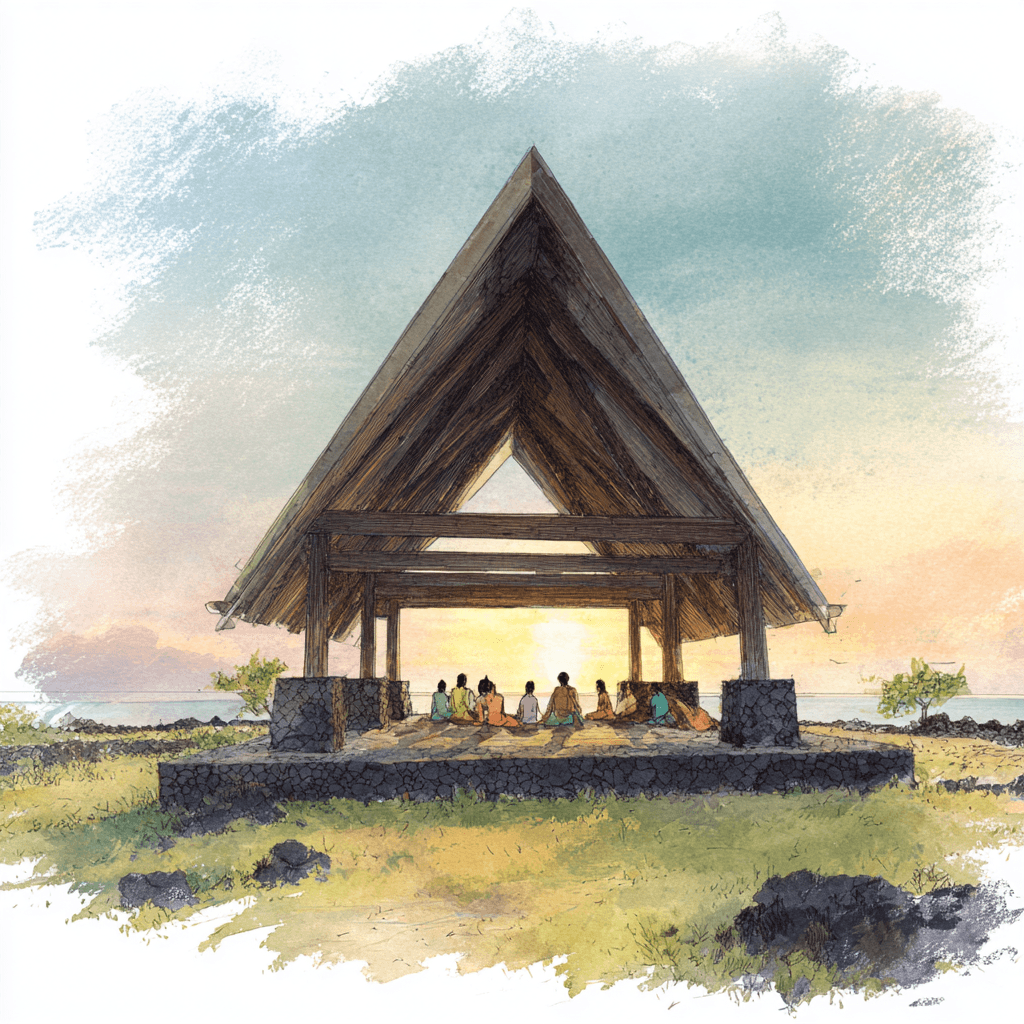
A future temple may serve as at the highest point of the land, facing the sunrise over the ocean.
It will serve as the dedicated space for sunrise and sunset aarti, congregational chanting, and holy day observances. Site placement and orientation will be refined in accordance with traditional Vastu Shastra principles to ensure harmony between structure, direction, land, and sacred function.
The temple is consecrated single-use space set apart for daily prayer.
Yoga Shala
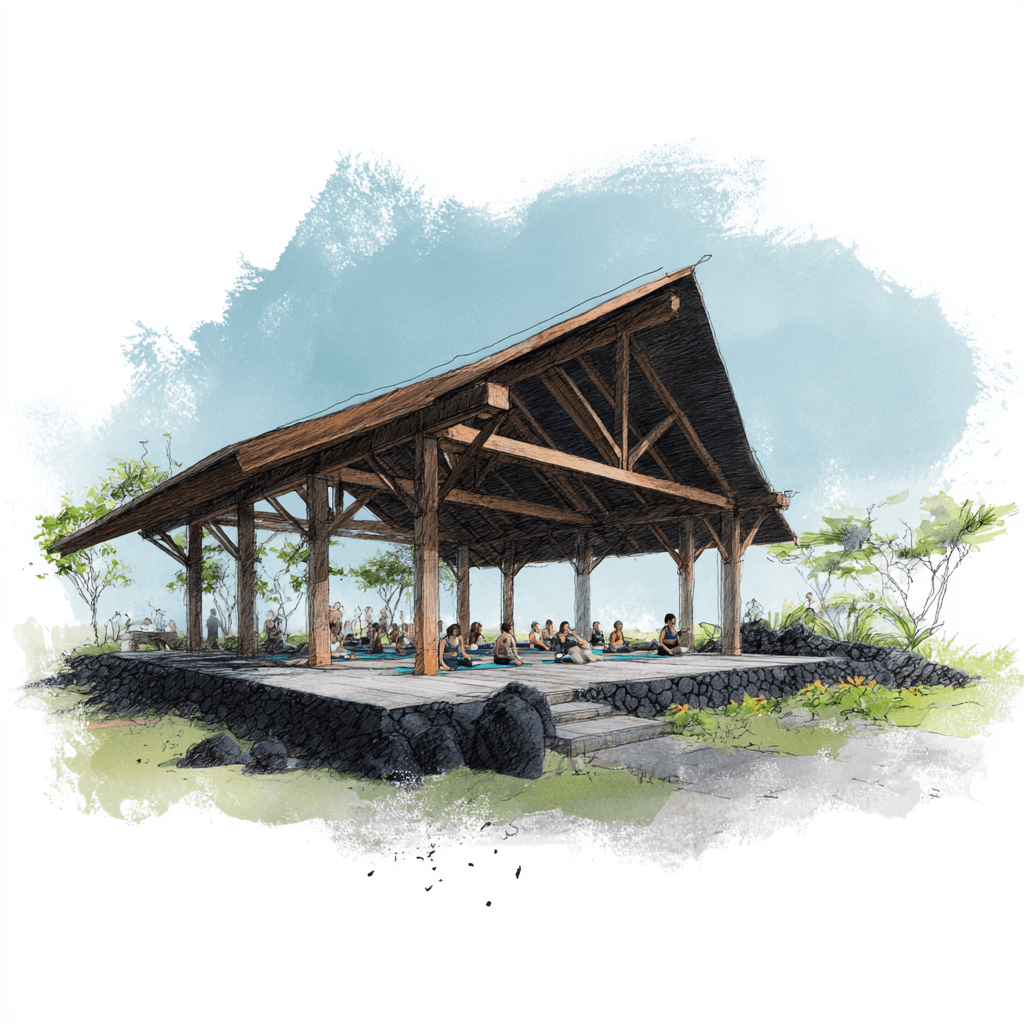
In addition to the temple, A future spiritual home may include a non-temple gathering space dedicated to study and practice. This hall will host asana, lectures, and educational offerings, providing a place where teachings can be shared while preserving the temple as a space devoted primarily to prayer and aarti.
Dhuni
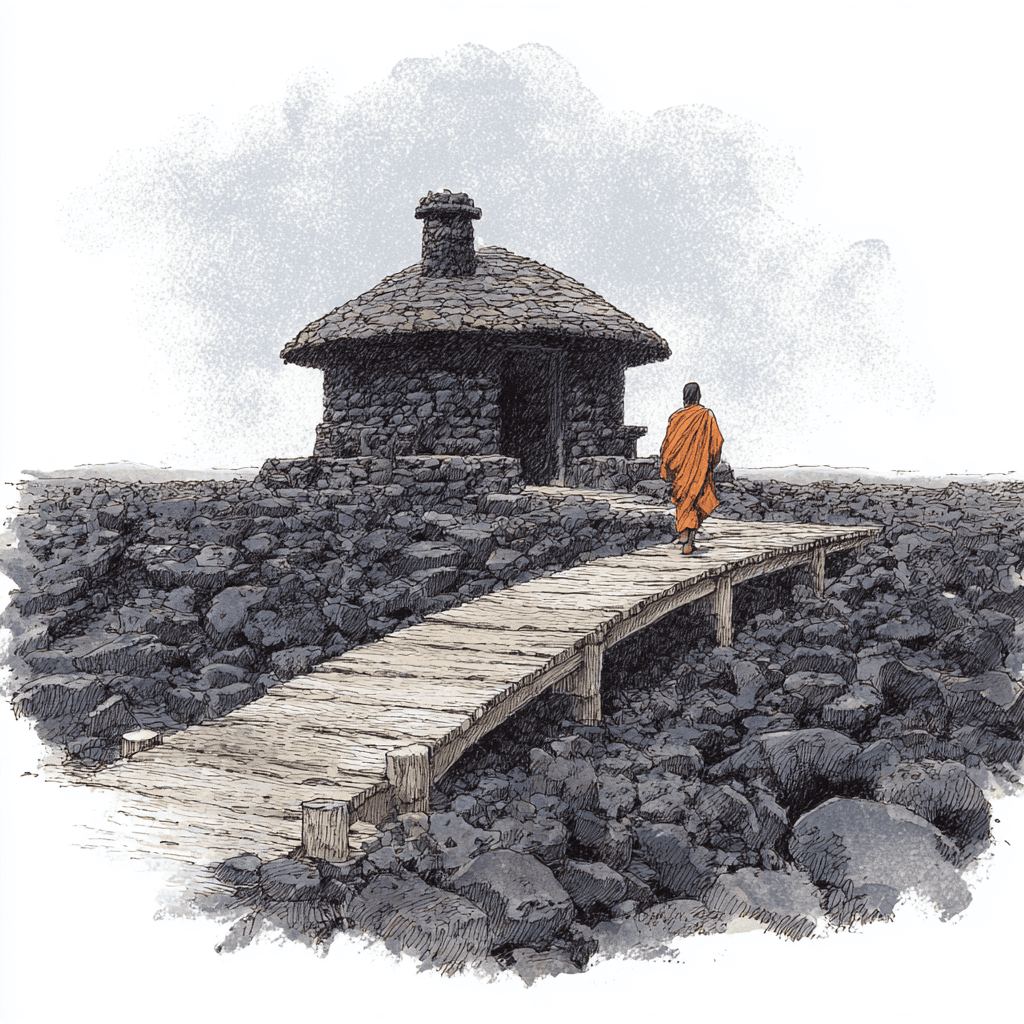
The dhuni is the sacred fire maintained in continuity with the Haidakhan lineage. It serves as a place of prayer, offering, and quiet remembrance. The fire may be tended daily and used for sacred observances and holy days. While aarti is sung at the temple, the dhuni remains a steady presence, grounding the ashram in continuity and sacred watchfulness. It represents constancy, humility, and living connection to the lineage.
Sacred Construction
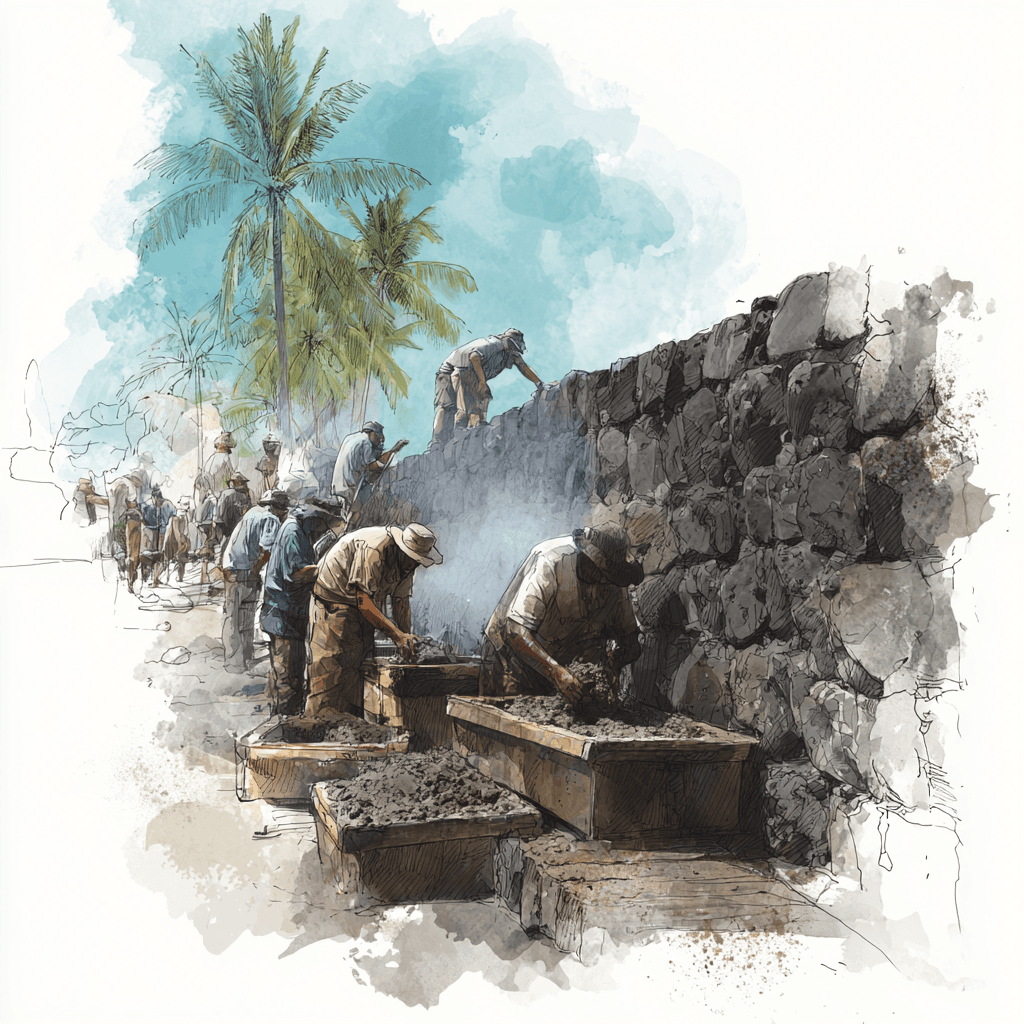
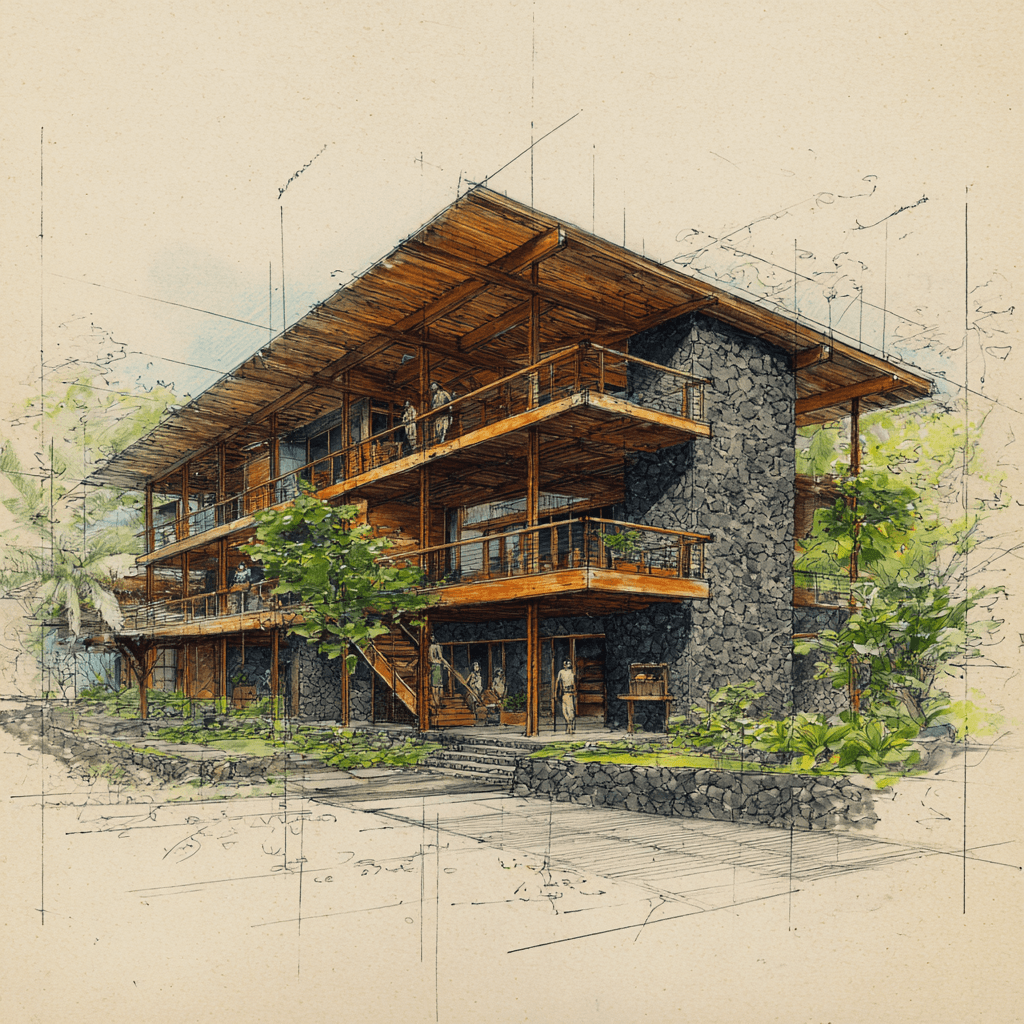
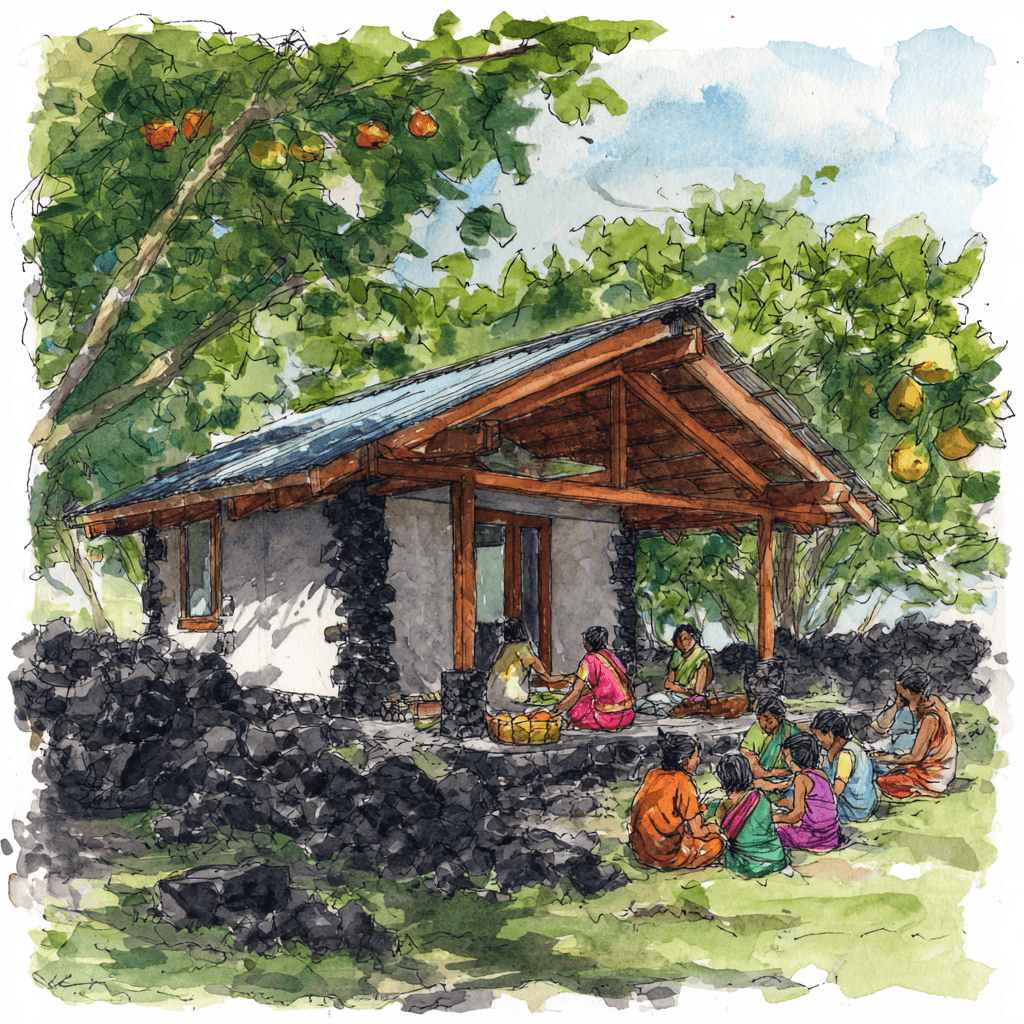
Any future structures will be built as an expression of karma yoga. Whenever possible, materials provided by the land itself, including lava stone from the 2018 flow, will be thoughtfully incorporated into construction. Building methods will seek a careful balance between local resources, structural integrity, and long-term durability in the humid marine climate of Puna.
Before large-scale construction begins, a phased materials study will guide decisions to ensure strength, sustainability, and appropriateness to the terrain. The intention is steadiness and endurance.
Construction is integrated with spiritual life. It is part of monastic formation. Lifting stone, preparing foundations, and shaping walls are acts of offering. The goal is simplicity with strength, structures that arise from the land and remain in quiet harmony with it for generations.
Monastic Residency
Should residential facilities be established, residency would be intended for those committed to maintaining the daily spiritual rhythm of the ashram. Those living on the land participate in both sunrise and sunset aarti and contribute daily to karma yoga through farming, building, cooking, cleaning, and stewardship. The ashram is a place of structured spiritual life. Visitors may stay temporarily, but only those who actively sustain the daily worship cycle reside on the land.
Dining Hall & Kitchen
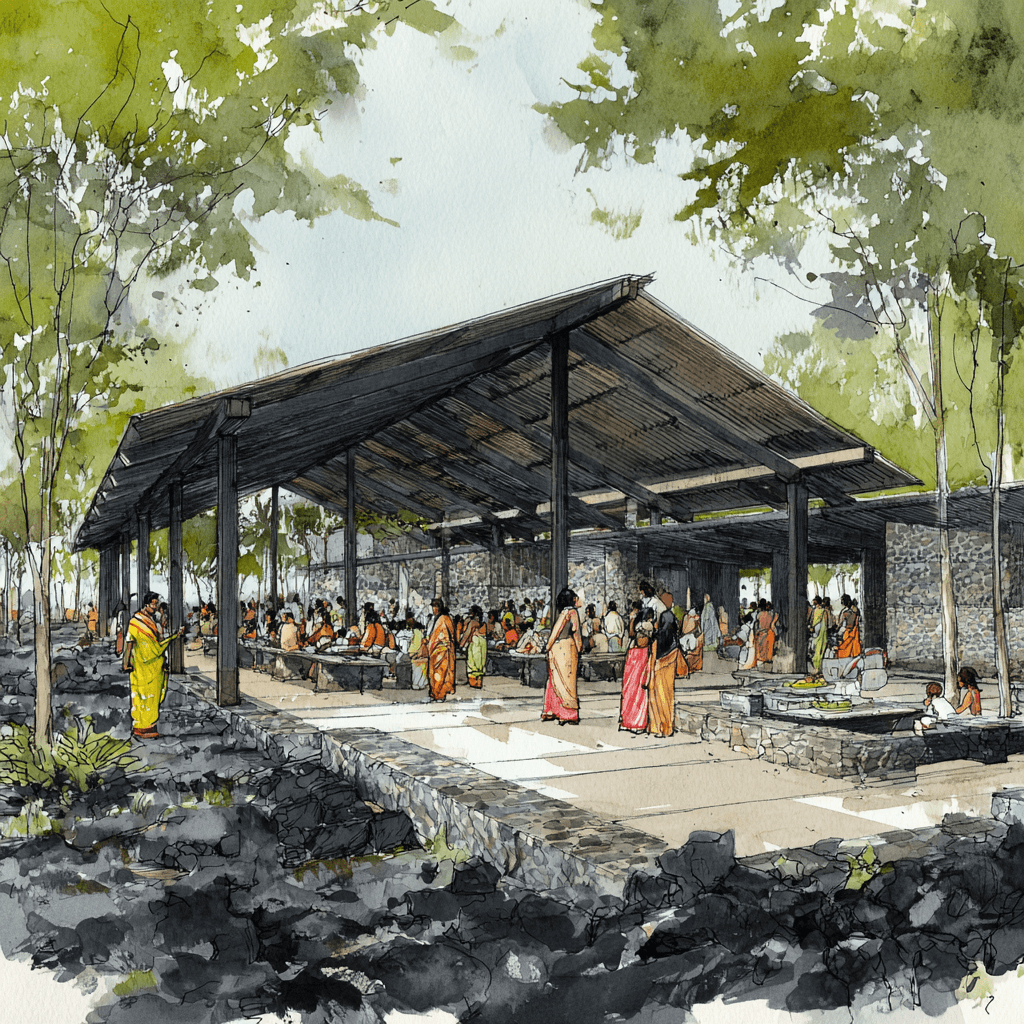
A future spiritual home may include a communal kitchen and dining hall supporting monastic residents and visitors. One simple vegetarian meal will be shared daily. Feeding others is an expression of seva. When possible, meals will be offered freely to members of the broader community. Food preparation, serving, and cleaning are forms of karma yoga.
Agriculture & Water Stewardship
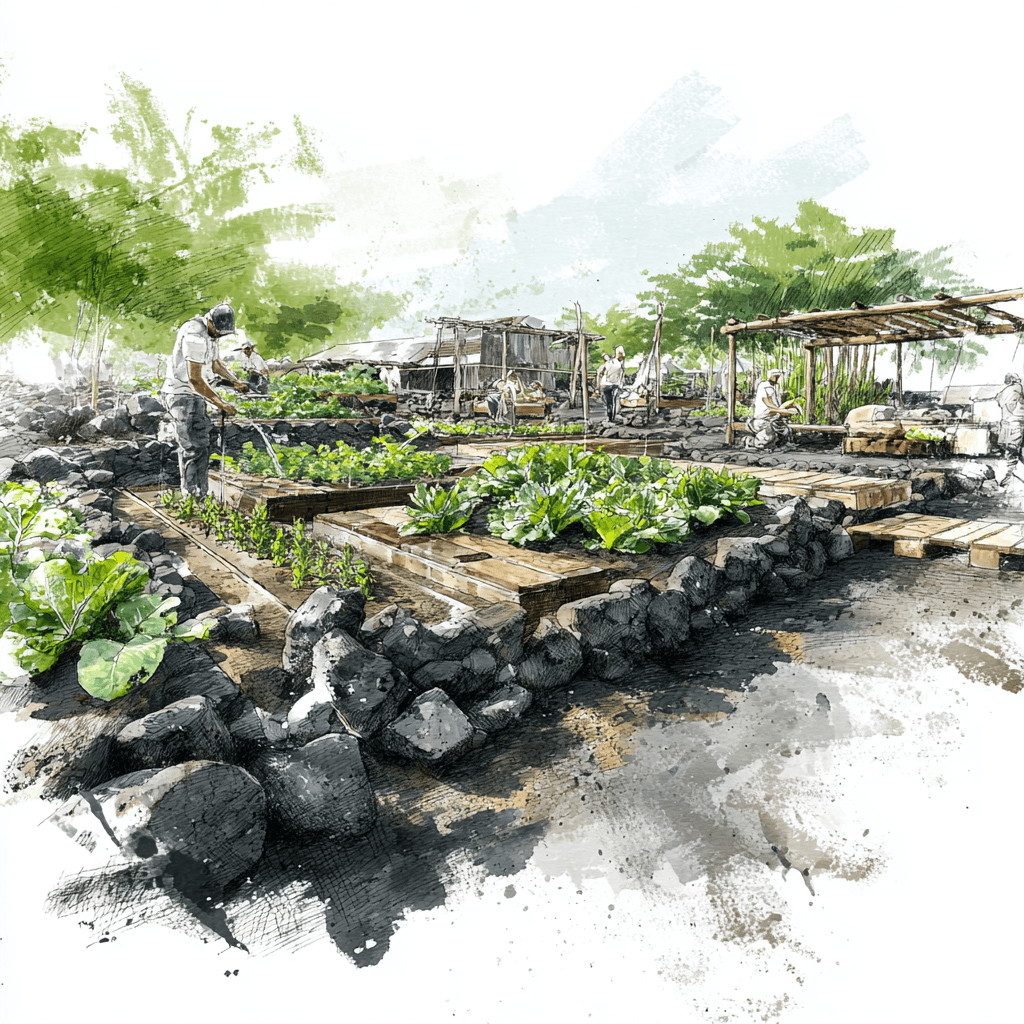
Agriculture and land stewardship would be expressions of karma yoga. Food is grown to support the daily meal and to care for the land entrusted to the ashram. Water systems, including catchment and natural bathing areas, will serve both agricultural needs and ritual purification before aarti. Traditional ashrams are often built near rivers. Water stewardship becomes part of that sacred continuity utilizing the rainfall on the eastern side of the big island of Hawai'i.
Long-Term Continuity
Babaji Hawaii is being cultivated with a long-term perspective. The goal is not simply to create events or gatherings, but to help establish a living spiritual community that can serve future generations.
Whether through community practice, sacred fire, educational programs, service projects, or a future permanent spiritual home, the intention is continuity, stability, and devotion rooted in the teachings of Shri Haidakhan Babaji.